I had never thought about packaging this way until Julie Rotuno said it.
I’ve been in retail for years. I’ve built a store, trained teams, managed inventory, nailed my buying. I thought I understood everything about what makes a customer loyal. I could tell you the exact moment a customer walks in whether they’re going to buy. I could read my numbers blindfolded. I knew my business.
And then Julie, CEO of Mid-Atlantic Packaging and a self-proclaimed “packaging nerd” like me said something that stopped me cold:
“That packaging, the tissue paper, the way it feels in her hand when she opens it later at home that is the last thing you get to say to that customer before they come back.”
I had never thought about it like that.
That is the moment your brand becomes real.
I sat with that for a minute. Not the transaction. Not the thank you. Not the follow-up email. The moment she opens that bag at home and feels what you put in her hands. That’s when she decides if she’s coming back.
Your Bag Is Speaking Without You
Think about it. You’ve spent months finding the right products. You’ve invested years training your team. You’ve created the perfect in-store experience. You’ve curated music, fixed the lighting, trained people to greet customers right. You’ve built a world.
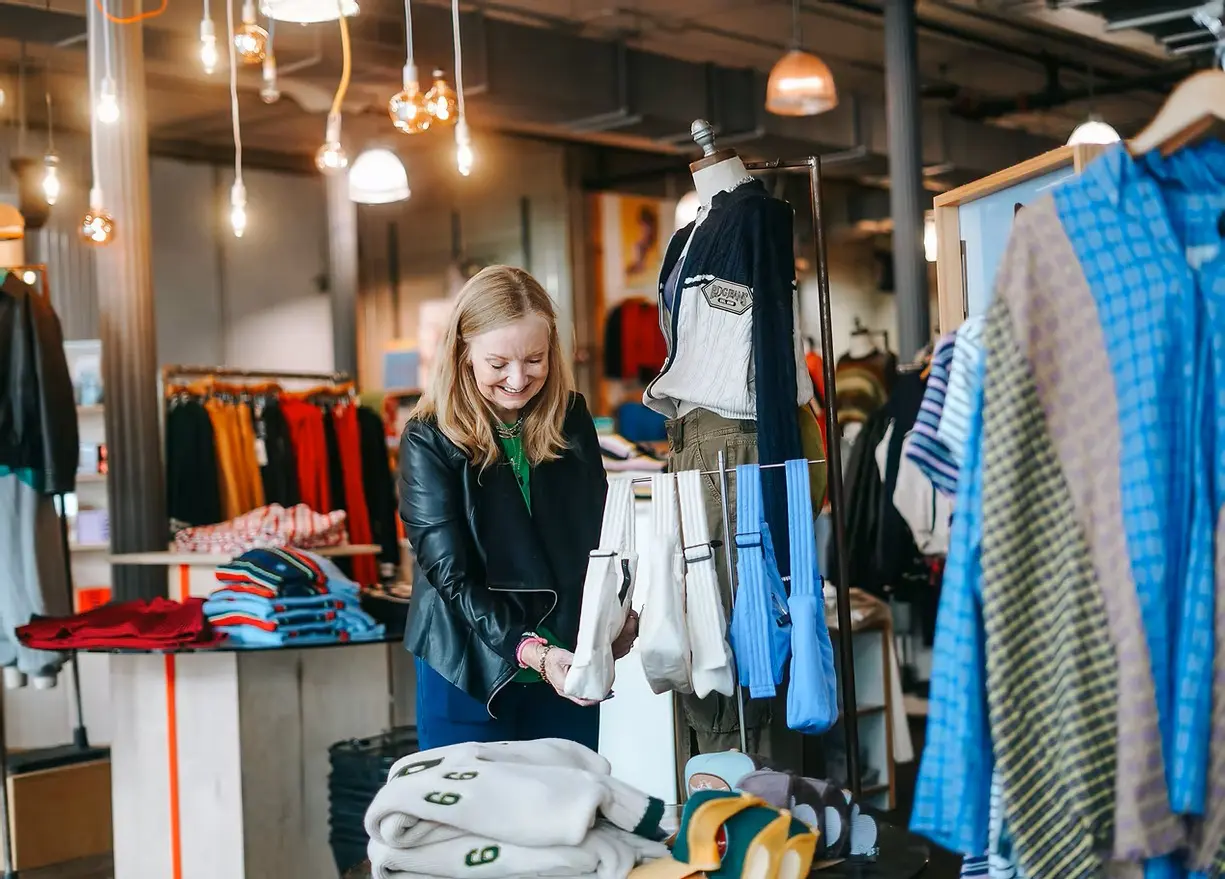
And then your customer walks up to your register, buys something, and you hand her a bag.
As she’s walking out your door, ask yourself: What is that bag saying about your brand?
Is it making her friends ask her, “Oh my gosh, what did you buy?” Is it giving her a reason to feel like your store is different from every other store up and down the street? Or are you like most retailers leaving money on the table because that bag is saying nothing?
Here’s what nobody except Julie is going to tell you: that bag is your final conversation. It’s not the transaction. It’s not the receipt. It’s the last moment you get to communicate something to them. And for them to truly feel, in a real physical way, your brand.
I remember the moment I realized this about my own store. I had a kids’ lifestyle brand called Dr. Goose. We spent so much money on the right products, the right team, the right customer experience inside the store. Everything was intentional. But our bags? We never thought about them.
Then one day, a customer came back and told me her favorite moment was when she was at a baby shower and someone saw our bag and asked where she got it. That bag started conversations. That bag advertised my store. That bag sat on shelves in people’s homes.
I had never thought about what that bag was doing for us.
Watch the Full Episode in YouTube:
The New Mom Story That Changed Everything
Julie told me this story, and I haven’t stopped thinking about it.
She was a new mom. Her daughter was three months old and having terrible skin sensitivity. Nothing was working. A friend pointed her toward cloth diapers from a small boutique in North Carolina. She ordered.
When the package arrived, Julie was exhausted. As a mom with little kids, you know that exhaustion. It’s the kind where you’re running on nothing. She opened the mailer, and the package was wrapped in a bag with raffia. And inside, there was a little note thanking her for supporting their small business.
In that moment in her exhaustion, in her overwhelm, in her doubt about whether she was making the right choices for her daughter that packaging lifted her up. It wasn’t a gift, but it felt like one. That thank you, knowing her purchase was making a difference for somebody else, knowing she wasn’t just a transaction…
It changed how she felt about that purchase forever.
Her daughter is thirteen now. Julie still remembers that moment.
When I heard that story, something shifted in me. I thought about all the moments like that in my store: customers who needed to feel seen, who needed to feel like their purchase mattered, who needed to know they’d made the right choice. And our bags? They were just bags.
That’s what packaging does. It doesn’t just wrap a product. It creates a memory. It builds connection. It says, “You matter. Your choice matters. We see you.”
You Don’t Need a Lululemon Budget (But You Can Learn From It)
I love this Lululemon bag. I don’t even remember what was in it or how I got it. But it says “Breathe Deeply.” And that one bag has had such an impact on me that I carry it everywhere. People ask me where I got it. I hand things to friends in it. I use it for groceries. I reuse it constantly.
That’s iconic packaging.
But when I was sitting with Julie, I thought: I don’t have that budget. I can’t afford that.
And she looked at me and said something that changed how I think about this entire thing.
The Three Pillars of Packaging
Pillar One: Brand Colors on Plain Stock
You don’t need custom everything to start. Plain stock bags and tissue in your brand colors or the feeling of your store. It still says, “This came from my store.” It’s still recognizable. It’s still doing work for you.
Cost: Low. Impact: High.
I talked to one retailer who took plain kraft bags and added tissue in her brand color. That’s it. One change. And customers started recognizing her bags immediately.
Pillar Two: Hybrid Approach
Most of what you use is plain stock. But you have one or two pieces that are branded. Maybe it’s a bag with your logo. Maybe it’s custom tissue that you use in your store and also use to wrap everything when you mail it out to your e-commerce customers.
No matter which channel your customer uses, they get that branded experience. They get that personal touch. That consistency matters.
Cost: Medium. Impact: Solid.
One of my clients does this. She uses mostly plain stock, but her custom tissue is unmistakable. She uses it in-store for wrapping. She uses it for e-commerce packaging. For gifts. For everything. And customers notice it. They recognize it. It’s become part of her brand identity.
Pillar Three: Full Custom Branding
Everything is branded. Front, back, sides, maybe even the inside. Boxes. Tissue. The complete package. It’s unmistakable. It’s premium. It’s memorable.
This is where you go when you’re established, when you have volume, when you can invest in that complete experience.
Cost: Higher. Impact: Unforgettable.
The Real Goal (All Three Pillars):
It’s not about the budget level. It’s about this: create repeat customers through emotional connection. Make people feel something. Make them want to come back.
Julie told me something that stuck with me: “With each of those pillars, at the end of the day, your goal is still the same. It is that you want your customers to become repeat customers and you want your business to be based off of emotion. Buying is an emotional experience. You as a business owner want to lean into that.”
That changed everything for me.
The Stranger Test (And Why You Need to Do It This Week)
This is my favorite part because it costs nothing and it reveals everything.
Here’s what you do:
Walk into your store like you’re a first-time customer. Don’t be the owner. Be her. Feel what she feels. Are you greeted when you walk in? How does the store look? How does the atmosphere feel? Does someone help you when you’re shopping?
Buy something. As they’re ringing you up, pay attention to what they do with your purchase. Do they wrap it in tissue? Do they put it in a bag? What’s the quality of the bag? What’s the care level they’re putting into the experience?
Walk out and take that bag home.
In the evening, sit down and pull everything out. Don’t do this with a checklist in your hand. Just sit with it. How does it make you feel? What’s your first impression? Is the tissue nice? Does the bag feel like it matches what you paid? Would you keep this bag? Would you use it again?
Now compare that to what you wanted that customer to feel. What emotion did you want her to have when she left your store? What do you actually want your brand to communicate? Luxury? Safe? Excited? Loved? Valued?
That gap? That’s your roadmap.
I did this exercise myself and I was shocked. I loved our in-store experience, but when I took that bag home and opened it, something felt off. The tissue wasn’t quite right. The bag felt flimsy. It didn’t match the premium products inside.
That was the moment I knew I had to change something.
I had a kids’ lifestyle store called Dr. Goose. The best moments were when customers would tell us they were at a baby shower or a birthday party and someone recognized our bag. They’d see it and immediately know it came from our store. They’d ask about it. They’d talk about it.
That packaging lives on much longer than you think it does. And it communicates so much.
The Seasonal Changes That Cost Almost Nothing
Here’s something Julie showed me that blew my mind: you don’t need a completely new design to keep your packaging fresh.
Change the tissue color. Change the ink color. Change the ribbon. Same plate. Different vibe. Your customers notice. They feel like your brand is evolving with the seasons.
During summer, maybe your bag is stamped in one color. During the holidays, you change it to a different color foil or a different color ink. It’s that simple. And it adds almost no additional expense to your business.
That’s how you stay top of mind. That’s how you signal to customers that you’re paying attention, that you care, that you’re thinking about the season they’re in.
I had never thought about this before. I thought seasonal packaging meant creating something entirely new. But Julie showed me it’s so much simpler than that.
Packaging Is Your Walking Billboard
I want you to understand something fundamental: when your customer walks out your door with your bag, she’s advertising you.
Her friends see it. Her family sees it. She carries it around. And every single time someone asks, “What’s that bag? Where did you get that?” you’re getting free marketing.
But here’s the thing that only independent retailers can do: free gift wrapping. You can turn every single purchase into a gift-ready moment. You can make it so beautiful that when she gives that gift, the person receiving it is already impressed before they even open what’s inside.
Amazon can’t do that. Big box stores can’t do that. You can.
Use that. Own that. That’s your superpower.
I think about this all the time now. Every customer who walks out with one of our bags is basically wearing a sign that says, “This is where I shop.” That’s marketing gold. And we’re giving it to them for free.
E-Commerce Changes Everything
I bought something from a women’s store I loved. I walked in, they wrapped everything beautifully in tissue, put it in this gorgeous bag. It felt premium. It felt intentional. It felt like I was getting something special. I walked out feeling like I’d made an amazing purchase.
Then I ordered from their e-commerce site. Same products. Same prices. And when the box arrived? The items were in a clear plastic poly bag, tossed into a corrugated box. That’s it.
I felt completely different. I spent the same amount of money, but suddenly it didn’t feel like it should have cost that much.
That’s the disconnect Julie was trying to show me.
Here’s what she taught me: packaging increases perceived value. Studies have been done on this. The right packaging makes customers feel like they got their money’s worth. The wrong packaging makes a $50 item feel like $10.
If you do e-commerce, order from your own business. See how it comes to your house. Feel how it makes you feel. Because that’s your customer’s reality. And if there’s a disconnect between your in-store experience and your shipped experience, you’re confusing your customers. You’re telling them two different stories about who you are.
I did this exercise and realized our e-commerce packaging didn’t match our store experience at all. We were investing so much in how things felt in-store, but online? We were just trying to get things shipped. Two completely different brands.
That had to change.
Why This Matters for Your Store
You didn’t open your store to sell transactions.
You opened it to create something. To serve your community. To make people feel something when they walk through your door and when they leave.
Your packaging is a critical part of that promise. It’s not a bag. It’s your final word. It’s your last conversation.
And right now, you’re probably making decisions about packaging the same way I did—from a logistics standpoint. How much does it cost? Can we get it cheaper? What’s the fastest way to get it out the door?
But that’s not what packaging is anymore.
It’s a brand moment. It’s the last thing you get to say. It’s your walking billboard. It’s the moment your brand becomes real.
Julie reminded me of something I should have never forgotten: packaging completes your brand. It helps make the brands that people remember. The iconic brands. The ones you want. The repeat customers. The businesses people support.
Because at the end of the day, buying is an emotional experience. And as a business owner, you want to lean into that emotion. You want to use packaging to your advantage. You want to create customers who come back not because they have to, but because they want to. Because they feel something when they interact with your brand.
That bag in her hand? That’s how you do it.
Your Millie Moment: This Week, Do These Three Things
Action One: Do the Stranger Test
Schedule it into your calendar. Walk your own store as a first-time customer. Feel what she feels. Buy something. Take the bag home. Sit with it in the evening. How does it make you feel?
Write down three things:
- How did this packaging make me feel?
- What did I want it to make me feel?
- What’s the gap?
Action Two: Identify the Emotion You Want to Create
After the Stranger Test, ask yourself: “What emotion do I actually want my customers to feel?” Write it down. Be specific. Is it luxury? Safe? Excited? Loved? Valued? Seen?
This is your north star. Everything about your packaging should support this feeling.
Action Three: Identify Your Starting Point
Which pillar are you in right now? Plain stock? Hybrid? Full custom? And which pillar do you want to move to?
You don’t have to jump to pillar three overnight. Just know where you are and where you want to go.
Resources & Links
- Visit Julie’s Website and take a look at her Facebook. You can also contact her on her personal LinkedIn account.
- Consultation Sign Up Link from Julie Rotuno
- Ready to free up cash and finally build wealth from your store? Apply for your free Gameplan Call, where we’ll identify your growth opportunities and map out the most profitable next steps to elevate your visibility, attract the right customers, and scale with confidence.
- Want a behind-the-scenes look at how our top clients grow profit without burning out? Our free training, Beyond Busy: 3 Shifts to Reclaim Your Time and Boost Store Income, walks you through the exact method we use in our Profit Club, focusing on your role as CEO, CIO, and CFO to grow a business that’s both profitable and sustainable.
- Follow us on social media for more updates! Facebook / Instagram
💚 Remember: That bag in your customer’s hand is the last thing you get to say before she decides if she’s coming back. You don’t need a massive budget. You just need to ask: What do I want her to feel? Then put that feeling in her hands. That’s when a customer becomes a raving fan.